از پیشبالینی تا مراحل پیشرفته بیماری پارکینسون
بیماری پارکینسون یکی از پیچیدهترین اختلالات عصبی-حرکتی است که میلیونها نفر در سراسر جهان را تحت تأثیر قرار میدهد. این بیماری به مرور زمان باعث اختلال در حرکت، تعادل و توانایی انجام فعالیتهای روزمره میشود و میتواند تأثیر زیادی بر کیفیت زندگی بیماران و خانوادههایشان داشته باشد. درک مراحل مختلف این بیماری برای بیماران، خانوادهها، مراقبین و حتی متخصصان پزشکی بسیار اهمیت دارد زیرا شناخت دقیق هر مرحله میتواند به تشخیص زودهنگام، مدیریت بهتر و بهبود کیفیت زندگی کمک کند.
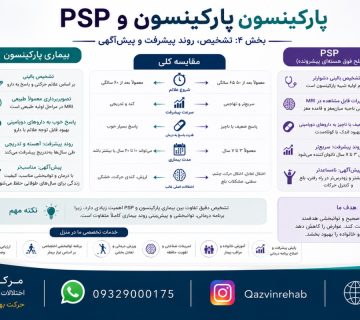
این مقاله قصد دارد یک مسیر کامل و گامبهگام از بیماری پارکینسون ارائه دهد و خواننده را با سیر پیشرفت بیماری از مرحله پیشبالینی تا مراحل پیشرفته آشنا کند. ابتدا با معرفی بیماری و مکانیسمهای آن، علل و عوامل مؤثر بر بروز پارکینسون آشنا خواهید شد تا درک کاملی از نحوه تأثیر این اختلال بر مغز و بدن پیدا کنید. سپس به مرحله پیشبالینی میپردازیم، جایی که تغییرات مغزی رخ داده اما علائم واضح حرکتی هنوز ظاهر نشدهاند. در این مرحله، نشانههای غیرحرکتی مانند کاهش حس بویایی، اختلالات خواب، یبوست و تغییرات خلقی میتوانند اولین هشدارها باشند و آگاهی از این علائم امکان تشخیص زودهنگام و پیشگیری از پیشرفت سریعتر بیماری را فراهم میکند.
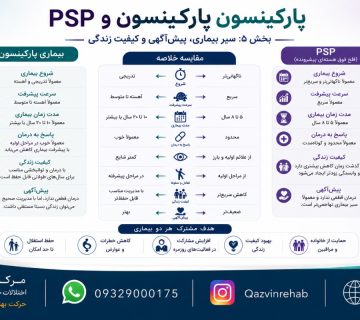
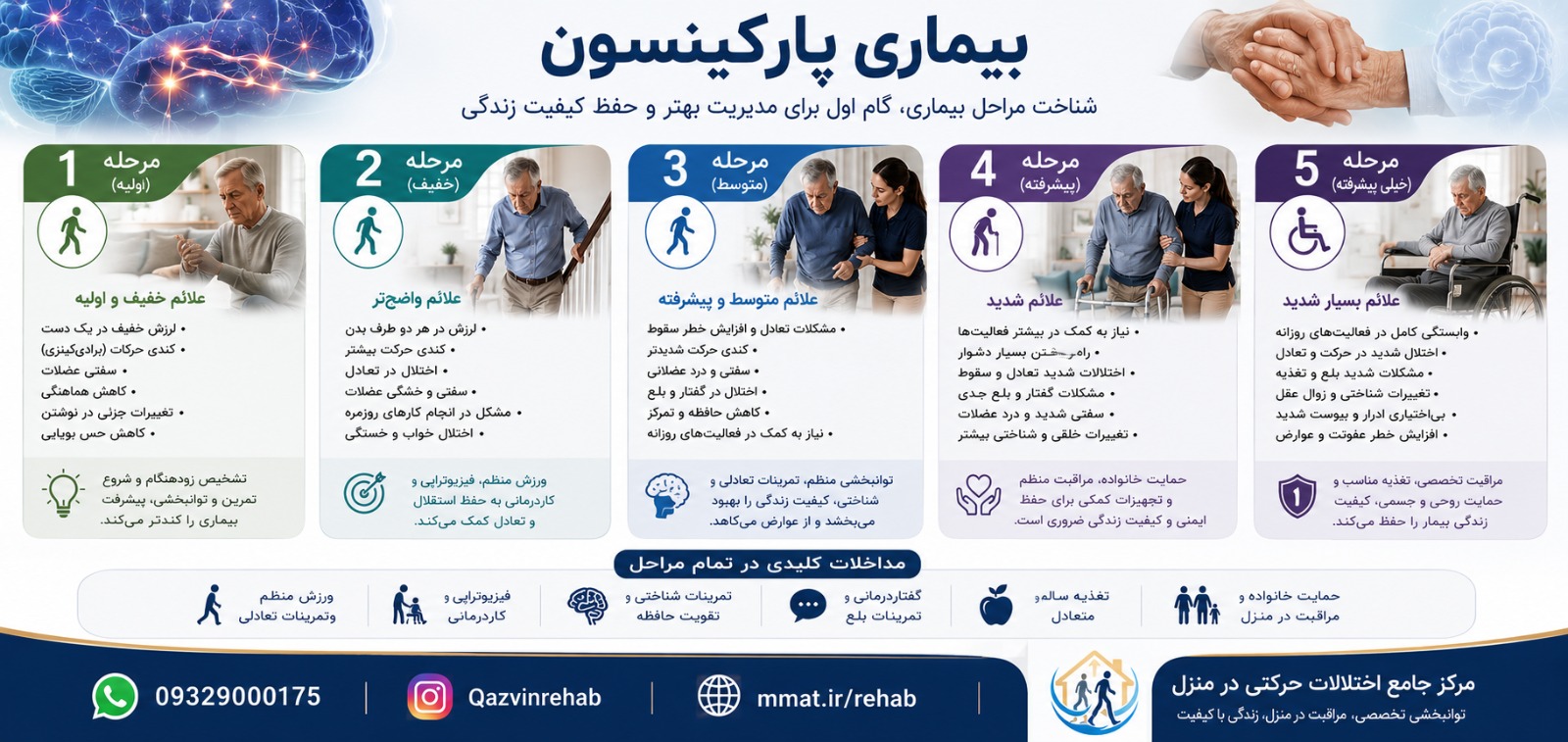
با ورود به مراحل بالینی، خواننده با مرحله یک پارکینسون آشنا خواهد شد که معمولاً با علائم خفیف یکطرفه مانند لرزش دست یا سفتی عضلات آغاز میشود و در بسیاری از بیماران استقلال نسبی حفظ میشود. در مرحله دو، علائم دوطرفه میشوند و چالشهای حرکتی و تعادلی افزایش مییابد، هرچند بیماران هنوز قادر به انجام بسیاری از فعالیتهای روزمره هستند. مرحله سه اهمیت ویژهای دارد زیرا بیماران کمکم دچار مشکلات تعادلی و خطر سقوط میشوند و توجه به ایمنی، ورزشدرمانی و حمایتهای محیطی بسیار حیاتی میشود.
با پیشرفت بیماری به مرحله چهار، توانایی حرکت بیمار به شدت کاهش مییابد، اغلب به واکر نیاز پیدا میکند و بسیاری از فعالیتهای روزمره محدود میشوند. این مرحله نیازمند مراقبت دقیق و تنظیم دارو و تمرینات توانبخشی هدفمند است. نهایتاً، در مرحله پنج، بیمار به طور کامل وابسته میشود، معمولاً روی ویلچر یا تخت میماند و نیاز به مراقبت ۲۴ ساعته دارد. در این مرحله، تمرکز بر حفظ راحتی، ایمنی و کیفیت زندگی بیمار اهمیت زیادی دارد و مراقبین نقش حیاتی ایفا میکنند.
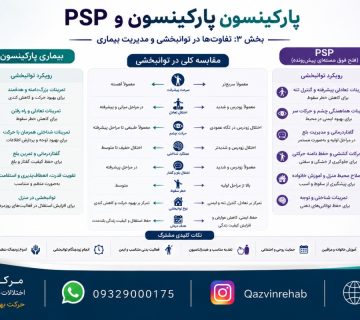
این مقاله علاوه بر توضیح هر مرحله، نکات عملی و توصیههای مراقبتی، ورزشدرمانی و توانبخشی در منزل را ارائه میدهد تا بیماران و خانوادهها بتوانند با استفاده از روشهای علمی و کاربردی، سطح استقلال و کیفیت زندگی را تا حد ممکن حفظ کنند. همچنین به تغییرات خلقی، شناختی و رفتاری ناشی از بیماری و راهکارهای مقابله با آنها پرداخته میشود تا نگاه جامع و چندبعدی به پارکینسون داشته باشیم.
با مطالعه این مقاله، خواننده نه تنها با سیر پیشرفت بیماری آشنا میشود، بلکه ابزاری برای پیشگیری از عوارض، مدیریت علائم و بهبود کیفیت زندگی در هر مرحله دریافت میکند. این مقاله برای بیماران تازه تشخیص داده شده، خانوادهها، مراقبین و همه علاقهمندان به موضوعات سلامت و بیماریهای نورودژنراتیو مناسب است و هدف آن ایجاد درک کامل، علمی و عملی از مسیر بیماری پارکینسون است تا بتوان با آمادگی و آگاهی بیشتری با چالشهای آن روبهرو شد.
در نهایت، این مقاله به عنوان یک راهنمای جامع عمل میکند، مسیر بیماری را از نخستین تغییرات مغزی تا مراحل پیشرفته نشان میدهد و خواننده را برای مطالعه جزئیات هر مرحله، نکات مراقبتی، ورزشدرمانی و توانبخشی آماده میکند. با این نگاه، میتوان بیماران را بهتر حمایت کرد، خطر سقوط و عوارض جانبی را کاهش داد و کیفیت زندگی آنان را در تمام مراحل بیماری بهبود بخشید.
Stages of Parkinson’s Disease: From Preclinical to Advanced Stages
Parkinson’s disease is one of the most complex neurodegenerative disorders, affecting millions of people worldwide. It is a progressive condition that gradually impairs movement, balance, and the ability to perform daily activities, significantly impacting the quality of life for patients and their families. Understanding the different stages of Parkinson’s disease is crucial for patients, caregivers, and healthcare professionals, as knowing what to expect can help with early diagnosis, effective management, and maintaining quality of life.
This article provides a comprehensive, step-by-step roadmap of Parkinson’s disease, guiding readers from the earliest preclinical signs to the advanced stages. It begins with a clear overview of the disease, its causes, and the mechanisms affecting the brain and body. Then it explores the preclinical stage, where changes in the brain occur before obvious motor symptoms appear. Subtle non-motor signs, such as loss of smell, sleep disturbances, constipation, and mood changes, may serve as early warnings, allowing for timely interventions and slowing disease progression.
As the disease progresses to clinical stages, readers will learn about Stage 1 Parkinson’s disease, typically characterized by mild, unilateral motor symptoms such as tremor or slight rigidity, with most patients maintaining independence. Stage 2 involves bilateral symptoms, subtle posture changes, and increasing difficulties with daily activities, while balance generally remains preserved. Stage 3 is considered mid-stage Parkinson’s, with noticeable postural instability, slower movements, and an increased risk of falls, emphasizing the importance of safety, targeted exercises, and home modifications.
In Stage 4, symptoms become severe, patients often require mobility aids such as walkers, and daily activities are significantly limited. Care strategies, medication adjustments, and specialized physical therapy are crucial at this stage to maximize quality of life. Finally, Stage 5 represents complete dependence, with patients typically wheelchair-bound or bedridden, requiring full-time care. Focus at this stage is on comfort, safety, palliative care, and caregiver support.
Beyond describing the stages, this article provides practical advice on exercise, home-based physiotherapy, fall prevention, nutrition, lifestyle adjustments, and emotional and cognitive support. It offers a holistic view of Parkinson’s disease, enabling patients and caregivers to anticipate changes and adopt effective strategies at each stage.
This guide is intended for newly diagnosed patients, family members, caregivers, healthcare professionals, and anyone interested in neurodegenerative diseases. It equips readers with the knowledge and tools to manage symptoms, maintain independence, and improve quality of life throughout the progression of Parkinson’s disease.
By reading this article, you will gain a complete understanding of the disease’s trajectory, from subtle early changes to advanced stages, and be prepared to explore the detailed recommendations, exercises, and care strategies provided in the following sections. Parkinson’s disease is a lifelong journey, but with awareness, planning, and proactive care, patients can maintain dignity, safety, and the highest possible quality of life.
📞 مشاوره رایگان 09329000175
🔗 Instagram.com/qazvinrehab
🔗 WhatsApp